Posts

Showing posts with the label patanjali

Pranayama - The Fourth Limb of Yoga
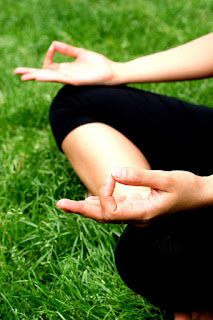
Image
Pranayama involves the use of various breathing techniques, and can be translated as "control of the breathing", or "breathing exercises." However, the use and effects of pranayama are much greater than this. The word p rana actually refers to the “vital life force” and ayama means “to control or extend”, so pranayama can also be defined as “extension of the life force”, which is why it can help to restore, to heal and to relax. . The yogis figured out in ancient times that “when the breath wanders, i.e. it is irregular, the mind is also unsteady, but when the breath is still, so is the mind, and the yogi lives long. So one should restrain the breath.” (Hatha Yoga Pradipika). The yogis also believed that the length of our lives could be measured in terms of how many times we are destined to breathe, rather than in terms of days or years. We can observe the same in the animal kingdom, animals such as tortoises, elephants, and snakes have a slow breathi...

Yoga Glossary

Image
A selection of Sanskrit terms interpreted into English. Yoga is an all inclusive way of looking at spirituality that can lead to physical health, mental clarity, relaxation, strength and fulfillment of one's life purpose. Yoga is about "union" and the belief in the basic unity in all life. The below lists a just a few concepts in yoga, Ayurveda, and Indian mythology, found within the tradition of Indian spiritual thought , from which not only religious traditions evolved, but also science, philosophy, art, culture, music, dance, and literature. Please note, this is not an exhaustive or authoritative list, but one that may be a helpful reference point to start with and build upon. It is advised to refer to more than one translation from Sanskrit to English as there is often no equivalent word in English for Sanskrit concepts. Abhava - non-being Abhaya mudra - seal of fearlessness Abhyasa - focus, to wholeheartedly apply one's efforts towards a...

Yama - The First Limb of Yoga

Image
Yamas - Our Understanding of the Universal Laws of Nature and Our Relationship with Ourselves and Our Environment. Patanjali's Yoga Sutras describe the Eight Limbs of Yoga.  It is important to note that these eight limbs are interrelated and can therefore only be experienced together as a whole, rather than as consecutive steps. The first limb of Yoga, Yamas, is about respecting and learning from the laws of nature. We regain our sense of union through postures, pranayama (breathing), and meditation, rather than feeling separate from nature. The motivation is to decrease dukha , or suffering, to increase sukha , or happines s, and to lead towards s at-chit-ananda , the unitive yogic state of truth, consciousness and bliss . Even if we can only experience a glimpse of this in fleeting moments during meditation we are at the very least improving our well being and potentially feeling connected and inspired in the way that we need it most. When prac...

The Eight Limbs of Yoga

Image
1. Universal laws of Nature (Yama) - non violence, truthfulness, integrity, divine conduct, and non attachment - “When we are established in non attachment, the nature & purpose of existence is understood." 2. How to Live in Harmony (Niyama) - simplicity, contentment, purification, refinement,  and surrender to the Divine - "From contentment, unsurpassed happiness is gained." 3. Postures (Asana) - "The physical postures should be steady and comfortable." 4. Breathing Exercises (Pranayama) - "Next come the breathing exercises, which increase the life energy." 5. Mastery of the Senses (Pratyahara) - "Once senses naturally withdraw inwards, mastery follows." 6. Concentration (Dharana) - "Dharana is when the attention is held focused on an object." 7. Meditation (Dhyana) - "Dhyana is when awareness flows evenly toward the point of attention." See more on the mind . 8. Enlightenment (Samadhi) -...

Spiritual Journey: Niyama - The Second Limb of Yoga

Image
Niyamas - Personal Observances for Spiritual Growt h Saucha - purity, cleanliness Santosha - contentment Tapas - heat, intense practice that leads to transformation Svadhyaya - study of the Self Ishvarapranidhana - trust, confidence, love and faith in life's creative principles, surrender to or connection with a higher being These are qualities that when cultivated even to a small degree can result in some increase in the level of harmony in our inner lives. Rather than being a list of criteria or rules, these are qualities that yoga enables us to be comfortable with, as we feel their benefits physically, psychologically and spiritually. Through their observation positive changes in our outer lives may naturally occur. However, in order to bring the ancient wisdom of the yoga sutras to life it is necessary to simultaneously be practicing the physical side of yoga. See Asana - The Third Limb of Yoga

Books - Inspirational Reads

YOGA PRACTICE - Light on Yoga by BKS Iyengar - Yoga Mala by Patthabhi Jois - Anatomy of Hatha Yoga by H David Coulter - Prana, Pranayama, Prana Vidya by Swami Saraswati - Meditations from the Mat by Rolf Gates & Katrina Kenison PHILOSOPHY - Hatha Yoga Pradipika, Translation & Commentary by Swami Vishnu Devananda - Bringing Yoga to Life by Donna Farhi - The Yoga Sutras of Patanjali by Alistair Shearer